In their own words …
Brian LaBatt
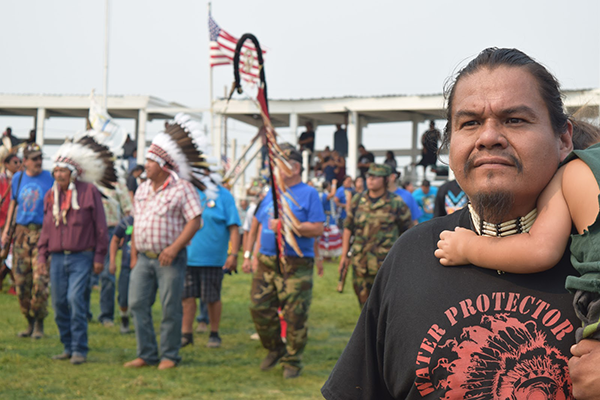
Brian LaBatt or Wanbli Gleska is from the Cheyenne River Sioux Reservation. In his interview, LaBatt discusses some of his experiences on the front lines and expresses an appreciation for the life he lived at Oceti Sakowin camp at Standing Rock. LaBatt places a lot of emphasis on his grandchildren and great-grandchildren as motivation for him to continue protecting Mother Earth.
Caela Brodigan
Caela Brodigan, originally from Massachusetts, was a senior at Oberlin College in Ohio when she first heard about Standing Rock in August 2016 while living on the U.S.-Mexico border in Arizona. Back at school, she felt a constant pull to be at camp rather than in a classroom learning theory, and on election night in November 2016 she decided to go. Within a day she and three classmates had a car, a Facebook call for donations, and advice from Robert Roche of Cleveland AIM about what the camp needed. At Oceti Sakowin she cooked, used her wilderness first responder training to help the medics, and stood on the front lines. In her interview she insists that what she found was not a protest at all but a space of prayer and gratitude, and she describes facing the police line in the tear gas while people around her said “we love you, you don’t have to do this.” After the camp was cleared, Brodigan and her friends organized a divestment campaign and a community oral history class at Oberlin with Roche, and she reflects on what Standing Rock taught her about the kinds of knowledge that live in the body, the heart, and the community rather than in the head.
Celia Espinoza
Celia Espinoza traveled from Idaho to visit and stand as a Water Protector at Standing Rock. When the camp was finally cleared, it had impacted her life so much that she moved to North Dakota to work on the legal campaign. She was hired by the indigenous-led Freshet Collective that provides support services for indigenous people who were arrested at Standing Rock. In her interview, she reflects on the power and beauty of the collective action, on being a mother and an activist, and what she learned about herself and her place in the movement.
Danny Grass Rope
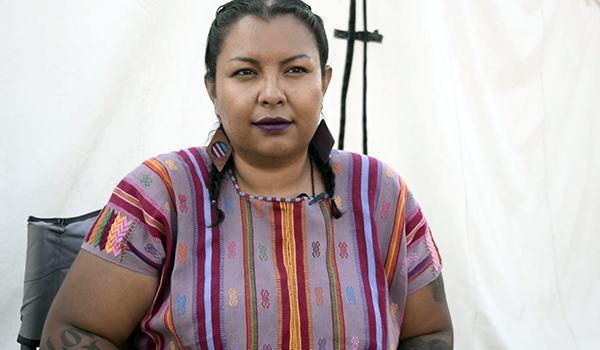
Danny Grass Rope was one of the young people who inspired the resistance movement at Standing Rock. He was part of a youth-led protest run from the Standing Rock reservation to Washington, D.C. in order to draw attention to the decision of the Dakota Access Pipeline that threatened the water source for people at Standing Rock and all those downstream who receive water from the Missouri River. After the run to D.C. he quit his job and lived at the camp for 8 months.
Danny was one of the founding members of the International Indigenous Youth Council created at Standing Rock that provided direction and a voice of the young people at camp.
Danny expresses how he was not initially receptive to the information about damage pipelines present. However, his exposure to others has helped him connect to his Native identity and understand the importance of his culture. In his interview, he says that he “woke up everyday knowing there was a battle,” but what kept the camp together was prayer and a commitment to unarmed direct action.
Dave Simison
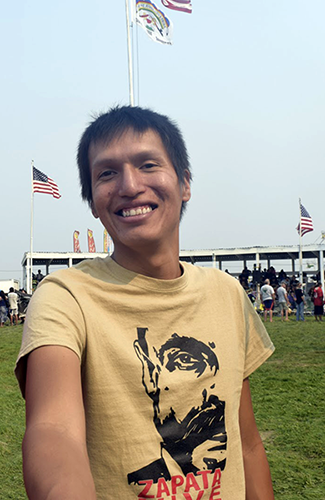
Dave Simison, known as “the lawyer who did dishes” is an attorney who traveled from Annapolis, Maryland to join the movement at Standing Rock. After seeing videos online of the dog attacks on the Water Protectors, Simison felt the need to take action. He headed out two days after Labor Day of 2016 to the Oceti Sakowin Camp established at Standing Rock. In his interview, he told about his time at camp and the shocking police brutality he witnessed on the front lines.
Don “Cuny Dog” Cuny
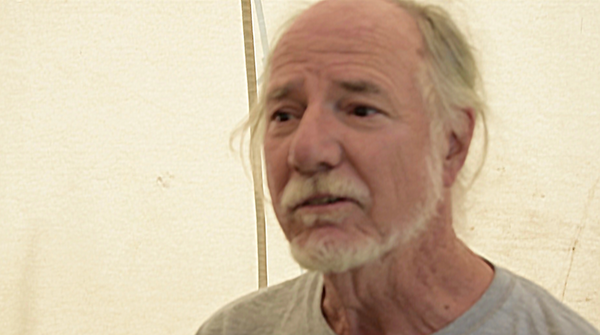
Don “Cuny Dog” Cuny is seen as a key figure in theAmerican Indian Movement and was a leader of the security team for many months at Standing Rock. He also has been involved in protest-based activism and community organizing.“Cuny Dog” is a Lakota from Manderson, South Dakota and is the Vice-President of the Grassroots American Indian Movement. Throughout his life he has taken part in other movements that include Alcatraz Island, fishing rights protests in Washington State, and Wounded Knee. He talks about the beautiful and harsh moments he experienced as a Water Protector. He sees far-reaching consequences of Standing Rock as “An awakening for the world not just America.”
Eden Jumper
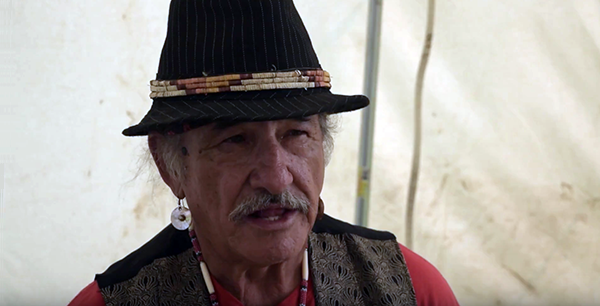
Eden Jumper is from the Seminole Nation in Florida. Struggling with finding his identity, he left school and decided to join the movement at Standing Rock. Jumper first arrived to Standing Rock in early February and found comfort in the two-spirit camp, where he stayed with his partner for several weeks. He describes his experience at Standing Rock by expressing the frustration with ways in which Native spaces at Standing Rock too often became “infiltrated by white people.” Jumper talks about the challenges he faces as a Native person in Florida, describing it as a place where “native spaces are nonexistent.” Jumper also explains the work that goes into educating others about the history of colonization and how draining educating others can be.
Chairman Harold Frazier
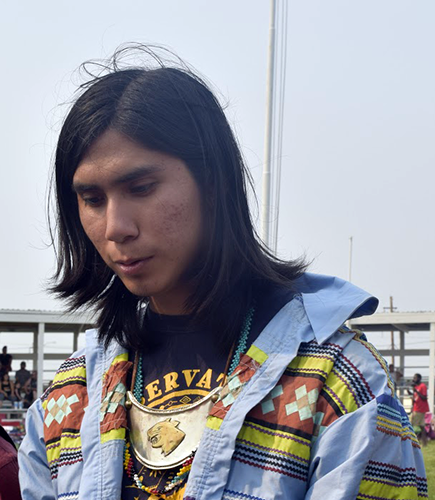
Harold Frazier is a former the Chairman of the Cheyenne River Sioux Tribe. He was at Sacred Stone in April 2016 when the first tipi went up, riding in on horseback, and his tribe was involved from the beginning. Frazier met with the U.S. Attorney’s office and the Army Corps of Engineers to press for the protection of peaceful people on federal ground. In October 2016 he met President Obama in California and was allowed exactly two questions; asking that the pipeline be stopped or at least made to undergo a full environmental impact statement, and that the excessive force being used against water protectors be ended. He corrects the interviewer that he was not “Standing Rock” but Oceti Sakowin, the camp of the Seven Council Fires, and calls the camp awesome. Asked what keeps him going, he answers, “These old ladies,” and speaks of the strength of Regina Brave, the grandmother who held Cheyenne River’s North Camp and was among the last to leave. Frazier believes that if the tribes had stayed together as one nation the camp would still be there, and he closes on the fight ahead: battle their laws, educate our own people, and send young people into government.’
James White
In his interview, White talked about his experiences in camp (Standing rock), his family, spirituality, the bonding that occurred, and the violence he witnessed. White wants to bring awareness to the next generation and have everyone speak up and become activists. He expressed how camp was a spiritual place for many. They believed that everything that happened in camp was meant to be. He spoke of the violence he witnessed when lasers and guns were pointed at the people who were defending their rights. White emphasized that the Elders are teachers and guides.
Jean Roach
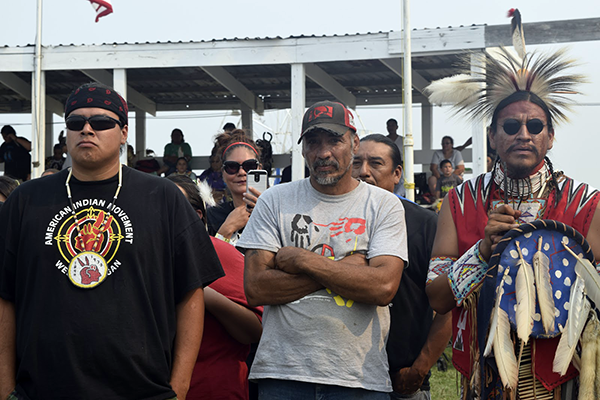
Jean Roach is an enrolled tribal member from the Cheyenne River Sioux Tribe. She is an organizer for the International Leonard Peltier Defense Committee and is an artist. She attended the We Will Remember Survival School as a child and has been involved in activism since then. She went to the front lines of Standing Rock after the mass first arrest. Roach spoke about the Tiger Swan infiltration tactics and how those familiar with the movement are not new to demonstrations like Standing Rock. She underscored how environmental justice is intrinsically linked to the indigenous struggle for freedom under colonization.
Joseph White Eyes
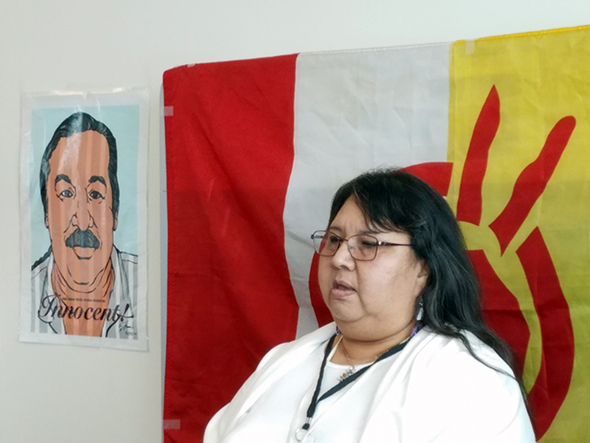
Joseph White Eyes is a young Cheyenne River Lakota organizer, born in 1995, whose family helped support the first international Sundance at Green Grass on the Cheyenne River Reservation. He grew up going every year, watching and listening, and carries the teachings from those ceremonies into his work. His activism began in 2010, watching Robin LeBeau, Joye Braun and others camp at the gate in midwinter to stop the tribe’s buffalo from being seized, and he decided to stop sitting back. In 2014 he helped found the One Mind Youth Movement in response to a youth suicide crisis on Cheyenne River, and he was part of the blockades against the Keystone XL mega-load trucks. White Eyes was in the room at the first NoDAPL meeting where Joye Braun proposed a camp, led the first nonviolent direct action training at Sacred Stone, and helped organize the youth relay run from Standing Rock to Washington, D.C., carrying a petition of more than 160,000 signatures. He was a founding member of the International Indigenous Youth Council at camp. He quit school and his job to live at Oceti Sakowin, and in his interview he describes both what the youth built there and how their voice was lost as the camp grew and larger organizations took the spotlight. His rule, learned from LeBeau, is simple: give your time to the youth, and “if the youth are the future, start acting like it.”
Kayson Thompson
Kayson Thompson is from the Itazipco band of the Lakota and lives on the Cheyenne River Reservation. He was only 16 years old during his time at the Standing Rock occupation beginning in August 2016. He lived there for eight months and was part of the Horse Nation camp. Riding his horse every day, he experienced a powerful connection to his sense of purpose and identity as a Lakota person. He was instrumental in driving the buffalo to Standing Rock and experienced as a result police brutality and mistreatment during his arrest.
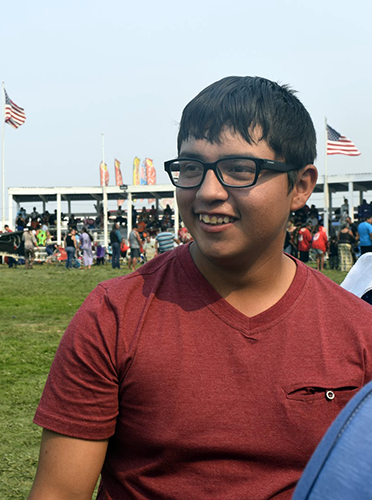
Larry Handboy
Larry Handboy is a 72 year old Lakota man from the White Horse community on the Cheyenne River Reservation in South Dakota. He has worked as security for the American Indian Movement for fifty-one years. He brought this experience to his security role at Standing Rock. In his interview, he discussed his early experiences working security for the 1972 Trail of Broken Treaties Protest in Washington, D.C. During the 71 day occupation of Wounded Knee in 1973 on the Pine Ridge Reservation, he worked night security. Handboy was called to testify in multiple Grand Jury investigations tied to the Wounded Knee trials in the 1970s.
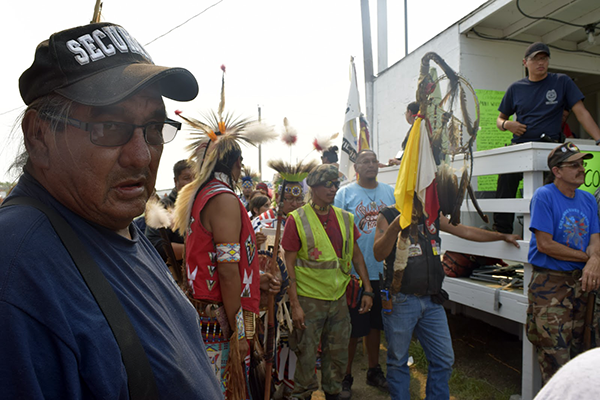
Laura Sterling
Laura Sterling is a Barkindji woman, from South East Australia, who initially traveled to America with intentions to witness the solar eclipse. She felt obligated to visit Standing Rock and the Cheyenne River Reservation to pay her respects to the land and its people. She sees striking similarities between the values of Native American culture and Aboriginal culture, particularly the emphasis on deep respect for the environment and Mother Earth.
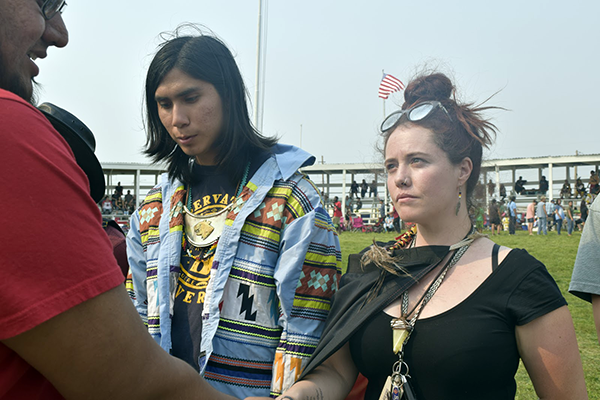
Lily and Olivia Kincaid
Lily and Olivia Kincaid are a mother and daughter from Nebraska who spent time at Standing Rock. During their interview, they described how much they loved camp life and were deeply affected by it. Lily emphasizes that she and her daughter went to Standing Rock in order to support the fight for the water and indigenous rights and sovereignty, and she also places a lot of emphasis on education of younger generations.
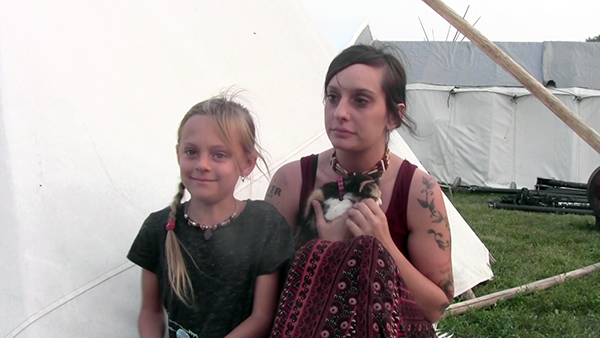
Lisa Skye
Lisa Skye, a Lakota from the Cheyenne River Sioux Reservation, is part of an extended family of activists who lived at the Oceti Sakowin camp for five months. She discussed how she observed the media belittle their movement and that those who know must speak out.Skye believes that this fight is to help future generations and is honoring and respecting those ancestors who fought before and for her. Skye firmly thinks that they must continue to fight hard and ensure that water is a provision for everyone. She touches also on history and daily experiences of racism that indigenous people face.
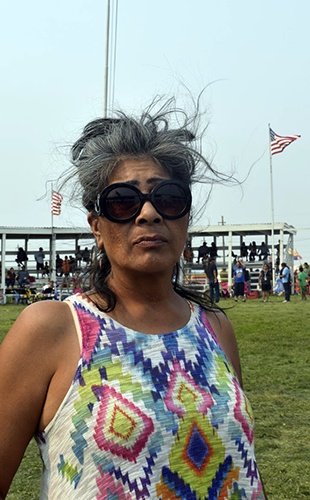
Madonna Thunder Hawk & Mabel Ann Eagle Hunter
Fighter, activist, tactical strategist and most importantly respected grandma from the Cheyenne River, Madonna Thunder Hawk has fought against things that negatively affect the lives of indigenous peoples and of all peoples. She and her sister Mabel Ann Eagle Hunter are both from the Oohenumpa band of the Oceti Sakowin and were interviewed together. Thunder Hawk stated that activists just have to “get things done without any excuses.” She wants to be able to provide support and advocacy for the generations coming after her as her ancestors did for her. Eagle Hunter talked about taking on the responsibility as an elder to ensure that future descendants have the right to life.
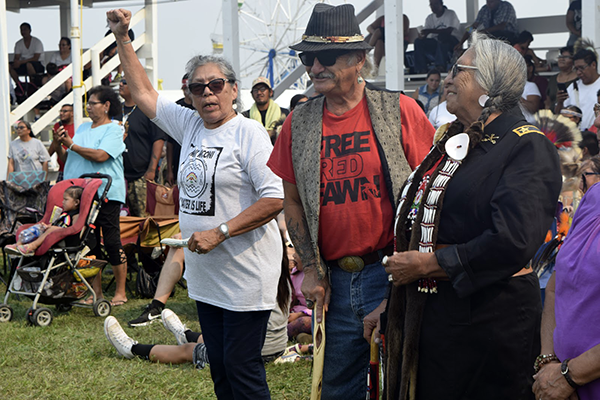
Marcella Gilbert
Marcella Gilbert is an enrolled tribal member of the Cheyenne River Sioux Tribe. Coming from a family of activists, her mother being Madonna Thunder Hawk an American Indian Movement leader, Marcella has been surrounded by activism her whole life. Her involvement in Standing Rock began in August, 2016 where she found a community that held itself to a higher standard, supported one another, and treated everyone as relatives. A camp where people were free to believe in their spirituality. Gilbert was heavily involved with the creation of schools at Standing Rock. Since Standing Rock the racism in South Dakota has been off the charts, yet it has not made it into any public discourse. There is a dangerous idea that Standing Rock is over to which Gilbert responds, “It’s not over for us, and it will never be over. Because not only was it about the water but it was about the treaty obligations, and that’s all we have. All we have is our treaties, and our lands, our water, and our lives. So it’s never gonna be over for us.”
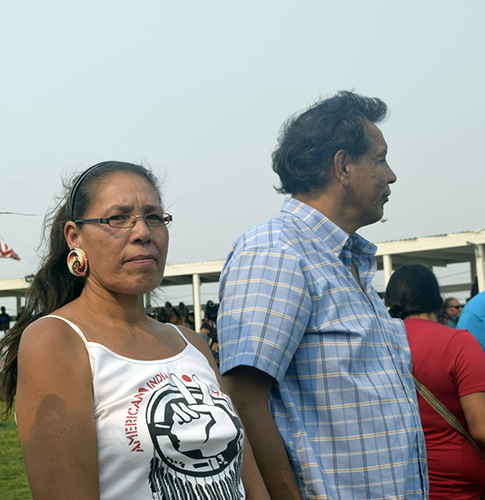
Moreno Waloke
Moreno Miguel is Minnecoujou Lakota and he lives in the Cherry Creek community on the Cheyenne River Sioux Reservation. Miguel was drawn to Standing Rock after hearing about the violence and brutality against women and children engaged in peaceful ceremonies and marches. Having thirteen sisters and being raised by powerful women, as is the Lakota tradition, he took a role as a protector and staff keeper. He spoke about the injuries he sustained in his role as a Water Protector and how he stayed grounded in the face of such brutality.
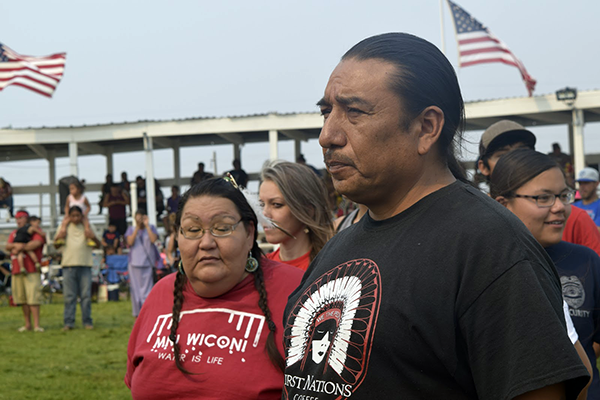
Paulino Mejia
Paulino first went to Standing Rock in September 2016 when he saw the news about the dog attacks on Water Protectors. He described the initial mood as somber, but his overall experiences at the camp were educational and healing. Everyone practiced their medicine freely and there was a large sense of community between different indigenous people. People took on responsibilities, whether by helping out in the kitchens or chopping wood for fires, and together they kept the camp functioning. The camp had grown in size to roughly 12,000 people, but by the time they were ordered to move off of the land, only 300 were left. It was very difficult for those who remained to gather what was left behind on their own, but they worked tirelessly to relocate sacred items to a new location.
After Standing Rock Paulino returned to Florida not as a student but as a full time activist. He decided that he needed to focus his activism on indigenous people. This means igniting conversations on the constructions of whiteness and actively practicing decolonization.
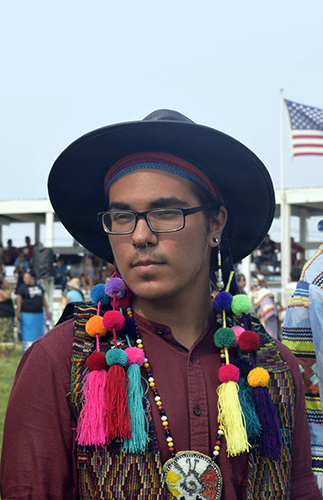
Paulino Mejia and Eden Jumper
Paulino Mejia and Eden Jumper are a two-spirited couple from Florida. Jumper, a native of the Seminole tribe, was a freshman in college at the time Standing Rock began. He first began his work in activism during college and decided to he needed to drop out to continue an “activist career.” Mejia, who was also a student in college at the time and a student worker, decided to go to Standing Rock where he spent several weeks at camp (Sept 2nd-30th), returned home and later joined Jumper for his second trip in February of the next year. Jumper expressed his appreciation for his time spent with elders at Standing Rock and their efforts to “teach the next generation to the best of their abilities.” Mejia asserts that his main goal moving forward is to dedicate more time to activism, especially in South Florida where, he states, “there is no space for indigenous people.” Choosing to leave behind college, because of its heavy focus on eurocentricity, he hopes to educate and spread awareness for indigenous people. Reflecting on his experience at Standing Rock, learning from elders and taking part in the resistance, Paulino exclaimed, “it’s our turn now.”
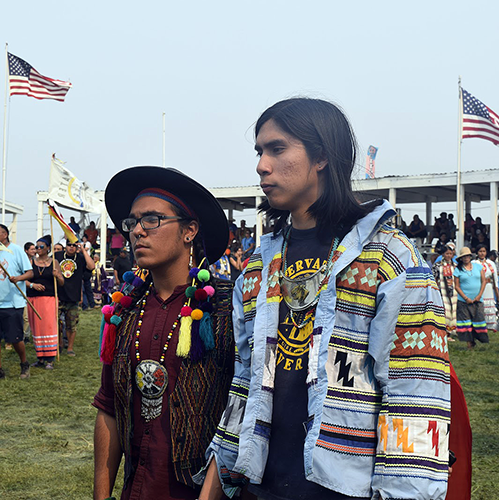
Phillip Gullikson
Phillip Gullikson is an enrolled member of the Mandan, Arikara and Hidatsa Tribe of North Dakota on his mother’s side and on his father’s, he is Ihunktowan Dakota. He was part of Standing Rock from August 2016 to the end of February 2017. He described camp life and likened it to how his ancestors would have naturally lived by sharing communally to meet the needs of the people. He talked about the political strategy of the movement and how Chairman Dave Archambault was skilled in dealing with the image of the camp, but that it should always be remembered that the entire movement began as a peaceful prayer camp led by women and young people. Deeply moved by the daily acts of “decolonization” in the form of intergenerational cooperation in the seemingly simple task of chopping wood, he is grateful to have been a part of something so powerful.
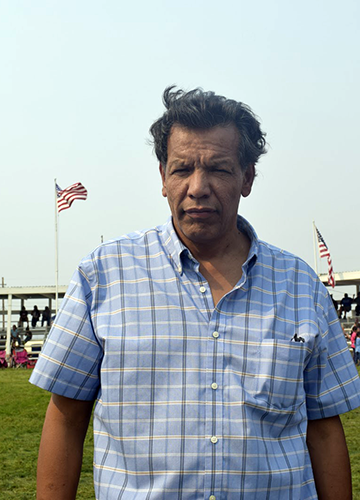
Phyllis Young
Phyllis Young is a Lakota and Dakota strategist and organizer whose self-described life struggle has been about the water, which is the great equalizer for every person no matter their creed. Putting into perspective the selflessness of fighting for a resource everyone needs, even your oppressor. Young has lived in many major cities, including Los Angeles as a part of the government Relocation program in the late 1950s and 1960s. Eventually, she moved back to the Standing Rock reservation, where she attended boarding school in the 3rd grade. Through that experience, Young saw firsthand how her people’s culture was being literally beaten out of them. While living in many different cities was at times difficult, she notes how it prepared her for all of the work that she did leading up to Standing Rock, including work in the United Nations, American Indian Movement and the Women of All Red Nations. Her travels in her young adulthood took her to Washington D.C., where she worked for the United States Department of State. In this job she worked with career diplomats, which “honed her skills in diplomacy and how to treat diplomats.” In this interview she spoke of the unforgivable crimes that have been committed against her people and the processes that she has been going through to have these crimes be acknowledged on a judicial level.
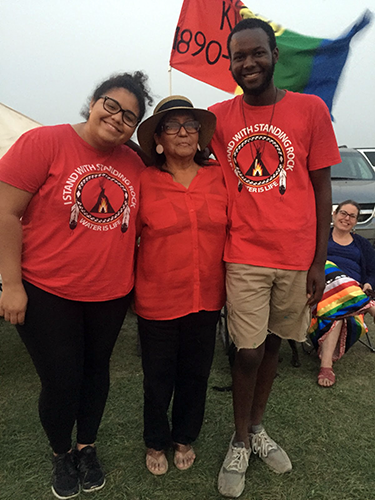
Redstick
Redstick is Muscogee (Creek) from Tulsa, Oklahoma, and a former soldier. He arrived at Standing Rock at the end of July 2016 and stayed until the end of January 2017. He began by tending the sacred fire at Sacred Stone and attending the veterans’ meetings, learning the area, the people and the movement by being there rather than through Facebook. From the veterans camp he moved into the camp’s warrior society and, after October 27th, when the Lakota and Dakota nations stood up to reclaim treaty territory, he held the front lines. In his interview he speaks as a veteran who took an oath to protect the people against enemies foreign and domestic, and he points out that the same Constitution names treaty law the supreme law of the land. He describes the prayer that held the camps together even as they swelled to many thousands, the officer on Backwater Bridge who bowed his head as a soldier was honored at the water, and the ranchers along Highway 1806 who asked the water protectors to look after their horses. Standing across the barricade from law enforcement, veteran to veteran, his message was direct: “You’re protecting an oil company.”
Robby Romero
Robby Romero is a musician and activist from the Apache territory of the Southwest. Through his interview Romero shared how indigenous peoples are being exploited for their land and resources because of greed and profit. Romero discussed how the arts are important to activism and resistance. He described music as a tool that transcends the boundaries of western society, that music is everything, “It’s the sound of the birds, and their melodies in the morning, the sound of the wind carrying the voices of our ancestors. Music is the heartbeat of the earth… Music is our drums, music is our voice.” Romero emphasizes the importance of our connection through protecting mother earth and the journey we are on together and how we need to learn how to live and work together.
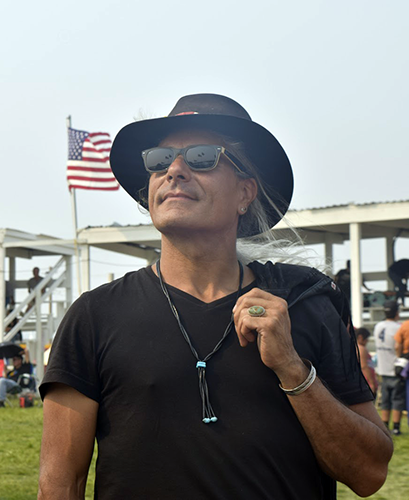
Sherman Alexander
Sherman D. Alexander Jr. was born in Eagle Butte, SD. When he first arrived at Standing Rock he thought it would be a short term thing, maybe a week or a month long, but he ended up staying for its entirety. “There are not many times in this world where you can do something positive,” he says. One of the things that he saw at camp was the respect that elders were given, and this is something that he wants to continue. He also appreciated the kind of learning that took place, being taught by elders and family members made the educational process more down to earth. He was really surprised by the unity that he saw, because it was the kind of thing that he had only heard of from the stories that his grandparents told him.
Sherman helped out by doing a lot of manual work, such as chopping wood, and serving as an inspiration for others. He was involved in many of the actions that took place and was shot by police with rubber bullets. He explains that Standing Rock was not a failure because it was a place where people unified and got their voices heard.
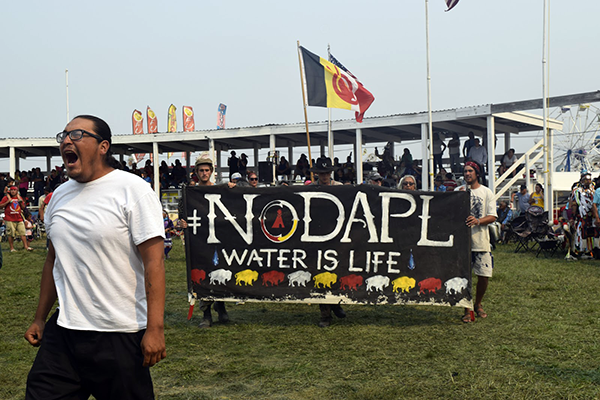
Sonny “Wonase” His Chase
Sonny Wonase is from the Standing Rock Reservation where he is a tribal member and a landholder. He described his experience at Oceti Sakowin camp and what he witnessed was a universal awakening of the mind, emotions, and spirit for the people who participated. He felt that sharing the stories of camp can heal and create connections with those who were not able to be in the camp.
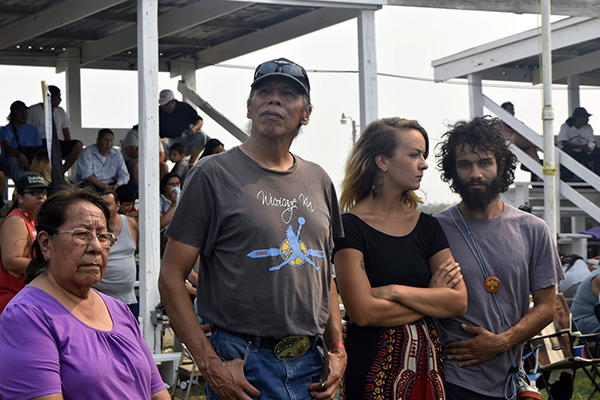
Vonda Long Eagle Horse
Vonda Long Eagle Horse is a Lakota activist and a fourth generation descendant of the Wounded Knee Massacre of 1890. She praises those fighting the pipelines around the world. She described her experiences at Oceti Sakowin camp and how it affected her life.
 The Water Protectors Community